May 1959

Spring settled over Rogers City with the kind of gentle insistence that made people linger a little longer downtown. Families strolled along Third Street, savoring the warmth on their faces, the soft breeze off Lake Huron, and the scent of lilacs drifting from yards just beginning to burst into color. After months of snowbanks and gray skies, the town felt newly awake, stretching itself into the season.
That sense of renewal carried straight into Rogers City’s annual Clean Up, Fix Up, Paint Up drive, the Chamber of Commerce’s spirited push to make the community shine again. It wasn’t just a slogan; it was a tradition. And this year, the Chamber’s board of directors made sure no one missed the message. Herman Vogler, Bob Haag, John Minelli, Frank Gilbertson, Tony Spencer, and Albert Klann marched down Main Street in bright white overalls, each armed with a broom tall enough to rival a flagpole. They swept with gusto, laughing as they worked, setting an example that was impossible not to admire. Their good humor and determination made it clear: Rogers City took pride in itself, and everyone was invited to join in.

That same pride pulsed through the high school baseball diamond, where the Rogers City Hurons capped their season with a thrilling 2–1 victory over Alcona to clinch the Huron Straits Conference Title. The boys played with grit, heart, and a kind of youthful fearlessness that electrified the crowd. Norm Wozniak earned All‑Star honors at shortstop, Tom Nowaczyk claimed his place as an All‑Star outfielder and starting pitcher Larry Sobeck was named the team’s most valuable player. Coach Earl Bye summed it up proudly: “These are a terrific bunch of boys, and I enjoyed working with them. They always came through when the chips were down.” In a town that cherished its young athletes, those words carried weight.

Adventure called from beyond city limits as well. Members of Rogers City’s Sea Scouts—Paul Smith, Gene Raymond, Brian Miller, Ken Beebe, Duwayne Shular, Karl Daniels, Butch Bisson, and Den Skipper Bob Haag—traveled to Gaylord for a statewide Camporee. They joined more than a thousand boys from across Michigan for two and a half days of camping, competition, and camaraderie. For the Rogers City group, it was a chance to showcase their skills, make new friends, and bring back stories that would be shared for years to come.

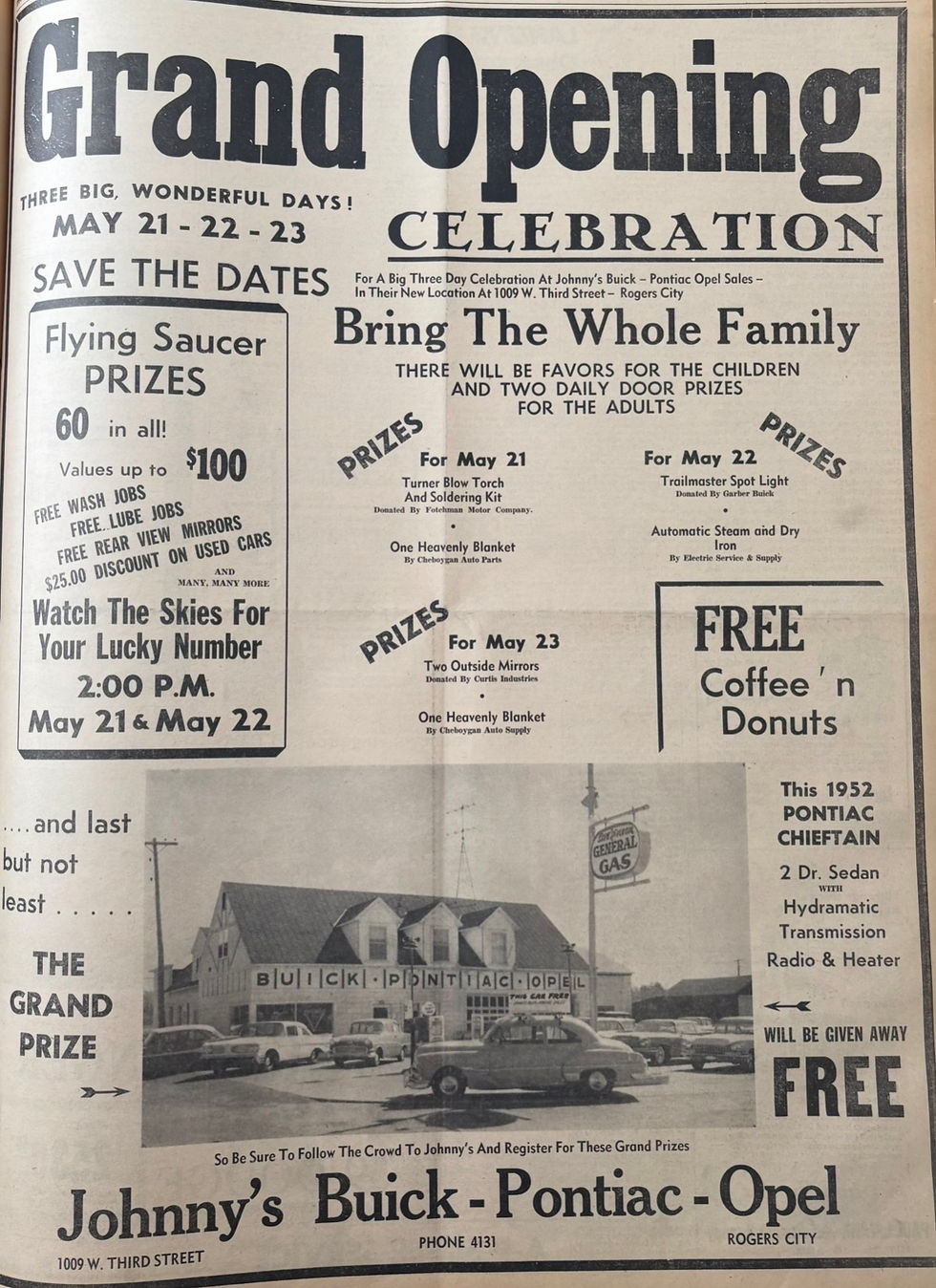
Back in town, excitement of a different kind filled Third Street as Johnny’s Buick‑Pontiac‑Opel reopened in its new location. Johnny Witulski welcomed visitors with a three‑day open house, offering free coffee, donuts, door prizes, and the irresistible chance to win a 1952 Pontiac Chieftain 2‑door sedan. Johnny’s journey in the automobile trade stretched back more than twenty‑five years, beginning when he was just fifteen, turning wrenches at Tony Przybyla’s A‑P Super Service. After purchasing the Harold Terry Buick‑Pontiac Agency in 1955, he built a reputation for honesty, skill, and a knack for knowing exactly what customers needed. His new showroom symbolized not just business growth, but the steady confidence of a man who had earned his place in the community.


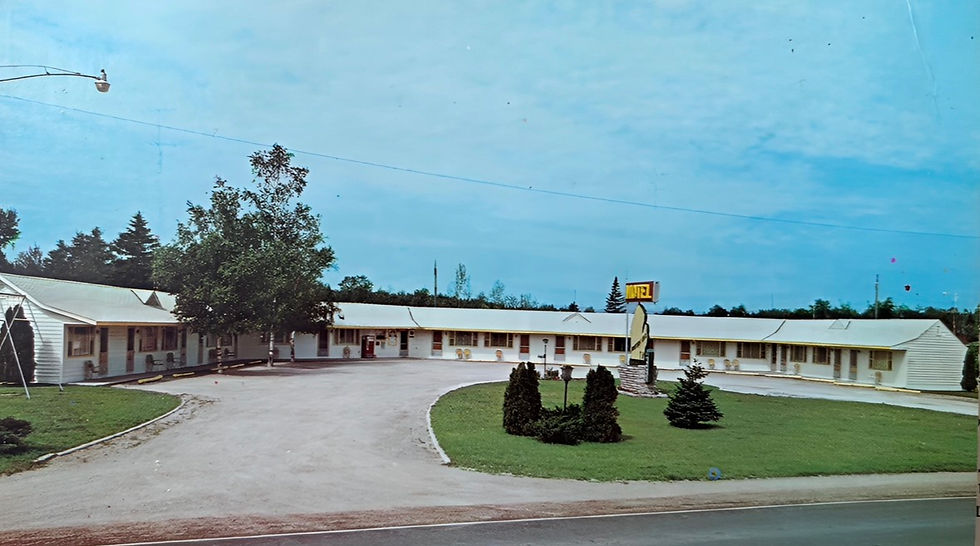
Changes were underway along Bradley Highway as well, where the Presque Isle Motel, long run by Mr. and Mrs. Joseph Vogelheim, was taken over by new owners, Ed and Georgine Robin of Howell. Ed brought nearly three decades of grocery experience with him, ready to begin a fresh chapter in hospitality. For travelers heading north in search of a peaceful retreat, the motel’s transition promised fresh energy and thoughtful attention.

Entertainment in northern Michigan took a leap forward with the arrival of WTOM‑TV in Cheboygan, broadcasting on Channel 4 from a bluff overlooking US‑23. Managed by Robert Mills, the station’s 631‑foot tower promised a dramatic improvement in reception for viewers who had long struggled with unreliable signals. Its powerful 100‑kilowatt reach extended from Alpena to Sault Ste. Marie to Petoskey, bringing NBC programming and the broader Paul Bunyan Network into living rooms across the region. For families gathering around their television sets each evening, this meant more news, more sports, more weather, and more entertainment than ever before.


And out at Big Cut, the Straits Aggregate Equipment Company quarry was bustling with activity. The 350‑acre site, the largest gravel pit in Michigan, roared with activity as 79 employees worked sixteen‑hour days to meet demand. Stone left the quarry by truck and rail, destined for major projects across the state: the expansion of Wurtsmith Air Force Base, the widening of US‑23 from Standish to Pinconning, and countless other construction efforts. Much of the aggregate had already played a role in the piers and decking of the recently completed Mackinac Bridge, a point of pride for everyone connected to the operation. With estimates nearing 500,000 tons for the coming year, Big Cut stands as a testament to industry, perseverance, and the foresight of those who had recognized its potential decades earlier.


Comments