May 1950
- charliebunton
- Aug 15, 2025
- 5 min read

As the lush forests and expansive farmlands surrounding Rogers City began to awaken from their winter slumber, the local schools echoed with the exuberance of students anticipating the end of another academic year. The air was filled with the scent of blooming flowers and the sounds of children playing, an unmistakable sign that the season of renewal and growth had arrived. In Miss Lucille Provost's physical education class, students engaged in the joyful and lively art of square dancing, a tradition that not only brought them together in playful camaraderie but also taught them the intricate steps such as the allemande left and the do-si-do. Their laughter and spirited voices resonated throughout the gymnasium as they practiced, honing skills that would not only serve them in school but also at community dances for many years to come, fostering a sense of unity and enjoyment among the townsfolk.

As the school year approached its conclusion, the academic achievements of the students were celebrated with great enthusiasm, particularly at the county-wide spelling bee held in the quaint Millersburg Community Hall. Here, young Gerald Ohlrich, a bright star from the small Heslip country school, showcased his remarkable talent and determination by triumphing over competitors from much larger institutions. His victory was a testament to the idea that excellence knows no bounds, inspiring fellow students and community members alike to strive for greatness regardless of their backgrounds.


Simultaneously, 14-year-old Richard Furtaw, a dedicated and responsible safety patrol leader from St. Ignatius Catholic School, was preparing for an extraordinary adventure that would take him to the nation's capital. He was set to participate in the prestigious 14th annual AAA National Safety Patrol Rally, an event that brought together young leaders from across the country to promote safety and responsibility. With him, he carried not only the pride of his school but also the hopes and dreams of a close-knit community that deeply valued hard work, determination, and the promise of a bright educational future for their children.

In the realm of spring sports, the Rogers City Huron baseball team faced a challenging start to their season with a tough loss against Atlanta, ending the game with a score of 3-0. Despite this setback, Huron pitcher Gordon Elowsky delivered a commendable two-hit performance, demonstrating his skill and resilience on the mound. The team, coming off a successful previous season with a record of 7-2, boasted a strong roster with five returning lettermen, including notable players Marvin and Gordon Elowski, Ivan Schaedig, Jerry Danbert, and Elroy Sellke, all eager to improve and make their mark in the league. Additionally, the high school tennis team opened their season on a high note, achieving a solid 4-1 victory over Petoskey, showcasing the talent of their players, which included Dick Jones, Larry Routley, Doug Nauts, Dave Goulette, Owen Lamb, Leonard O'Connor, and Don Mulka.
In the business sector, the Presque Isle County Advance highlighted the importance of local commerce through their Meet Your Merchant campaign, featuring four prominent businesses: Eddie's Tavern, Ingrid's Beauty Shoppe, Gross and Winfield Excavators, and Osborn's Model Laundry. These establishments played vital roles in the community, providing services and fostering connections among residents.


In a significant advancement, the Presque Isle County Savings Bank introduced a state-of-the-art automatic check sorting machine aimed at minimizing errors and enhancing efficiency. Dean Potts from the National Cash Register Company provided essential training to bank employees, including John Blasky and Mrs. Joseph Micketti, ensuring they could operate the Central Proof and Control machine effectively, thus improving customer service and operational accuracy.


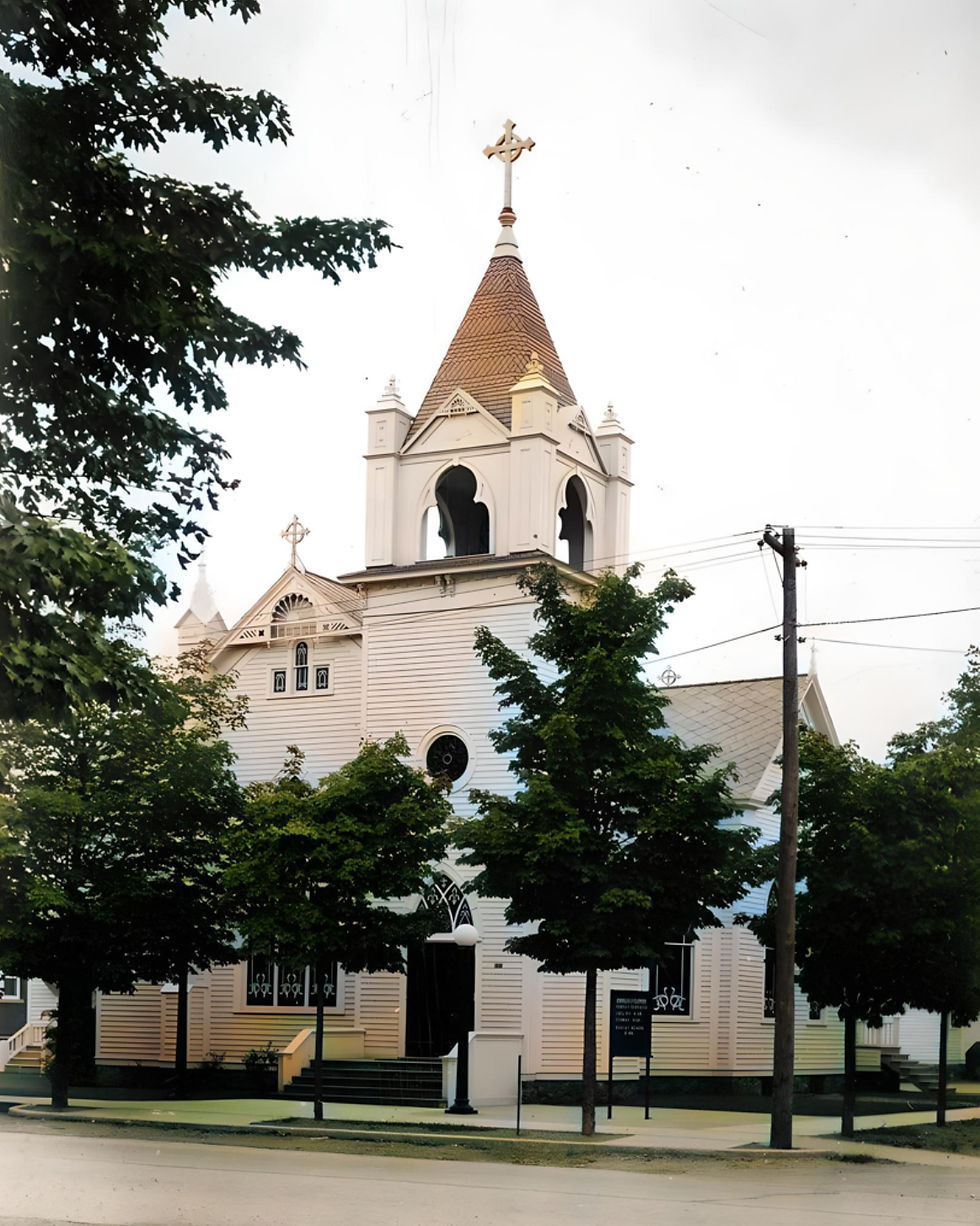
A notable milestone was celebrated by the congregation of St. John's Lutheran Church, which marked the 50-year history, or Golden Anniversary, of their beloved pastor's service in the holy ministry. Born to Lutheran parents near the Russian border on April 14, 1874, Louis Linn immigrated to the United States in 1887, settling in New Britain, Connecticut. His journey to becoming a leader in his faith community was marked by hard work; by the age of 13, he was employed at the Stanley Rule and Level Company, where he crafted carpenter's rules. His educational path led him to Concordia Lutheran College in Fort Wayne, Indiana, followed by Concordia Theological Seminary in St. Louis, Missouri, from which he graduated in 1900. After being ordained in Springfield, Massachusetts, he served as pastor of Trinity Lutheran Church for a decade before taking on the pastoral role at St. John's Lutheran Church on August 10, 1930. His ability to preach in multiple languages—English, German, and Polish—made him particularly appealing to the diverse community he served, especially during challenging times such as the Great Depression and World War II. Under his visionary leadership, the congregation flourished, growing to over 1,200 members, with Sunday school attendance also rising significantly, thanks in part to the dedicated efforts of his wife, Rosamond.

In a delightful development within the community, a new Cub Scouts unit was established at St. Ignatius Catholic Church, aiming to instill values of teamwork, leadership, and community service among its young members. Albert Cadieux took on the role of Cubmaster, supported by a group of enthusiastic Den Dads, including John Smolinski, Arthur Hein, Leo Schefke, Jacob Dembny, and Stanley Jachcik. The Den Chiefs—John Nowak, Ronald Morley, Leonard LaTulip, Richard Raymond, Alex Malocha Jr., and Anthony Przybyla—were instrumental in guiding the Cub Scouts, who comprised an eager group of boys including Jerry Malocha, Tony Bellmore, Alex Andrezejewski, Bill Bisson, Duane Sobeck, Kenneth Lewandowski, Larry Hein, Thomas LaTulip, Norman Romel, George Shorkey, Larry Sobeck, Delbert Jachcik, William Belz, Gary Nowak, James Dembny, Barry Sheedlo, Jerome Schefke, Robert Gatzke, John Vogelheim, Jim Mertz, Bob Ware, and John Joppich.
Additionally, the excitement continued as 32 members of Boy Scouts Troop 76 and 24 from Troop 90 embarked on a memorable trip to Mackinac Island for a three-day Crusade Jamboree. This event gathered approximately 1,500 Scouts from across Michigan, fostering camaraderie and a spirit of adventure. The highlight of the gathering was the unveiling of an impressive 8 1/2-foot replica of the Statue of Liberty, a symbol of freedom and hope that resonated deeply with the young Scouts and their leaders.

In a more somber note, the community faced a call to vigilance as citizens were urged to be on the lookout for a young, blonde-haired bandit who had committed a brazen robbery at the International Hotel shortly after midnight. The assailant threatened the owner, Phil Muszynski, with a firearm, forcing him to empty the cash register before coercing him into his second-floor residence, where he stole money and other valuables. This alarming incident served as a stark reminder for residents to secure their homes and report any suspicious activities to local authorities, reinforcing the importance of community safety and awareness.



Comments