July 1958
- charliebunton
- 15 hours ago
- 4 min read

The Fourth of July rose from rain‑soaked streets into one of the most spirited celebrations the community had ever seen, a weekend so full of heart that even two days of steady drizzle couldn’t dim its glow. Current and former residents poured into town from every direction, determined that a little weather would not wash away the joy of homecoming. Umbrellas bobbed along sidewalks, jackets were shared, laughter rose above the patter of rain, and the people of Rogers City proved—once again—that celebration is a matter of spirit, not skies.

On the morning of the parade, excitement gathered like sunlight breaking through clouds. Before the first float rolled down Third Street, 18‑year‑old Carol McLennan stepped onto the reviewing stand, where Christian Beukema, President of Michigan Limestone, crowned her the Limestone Queen. The moment carried a kind of ceremonial brightness, a reminder of the pride the community took in its young people and in the industry that shaped so much of its identity. As Carol accepted her crown, thousands of spectators lining the street cheered, their applause echoing off storefronts and houses decorated in red, white, and blue.

Then the parade surged forward—more than 60 floats strong—each one a burst of creativity and hometown pride. The Servicemen’s Club offered one of the most striking sights: a re‑enactment of the famous Battle of Iwo Jima photograph, rendered with such reverence that the crowd fell briefly silent before erupting into applause. Plath’s Sanitary Market brought humor and good cheer, clowns danced and waved, and Davey Crockett strode along with frontier swagger. And when the beloved Canadian Pipers Band from Sault Ste. Marie appeared, their bagpipes and drums rolling down the street in bold, rhythmic waves, the crowd leaned forward as if pulled by the music itself.


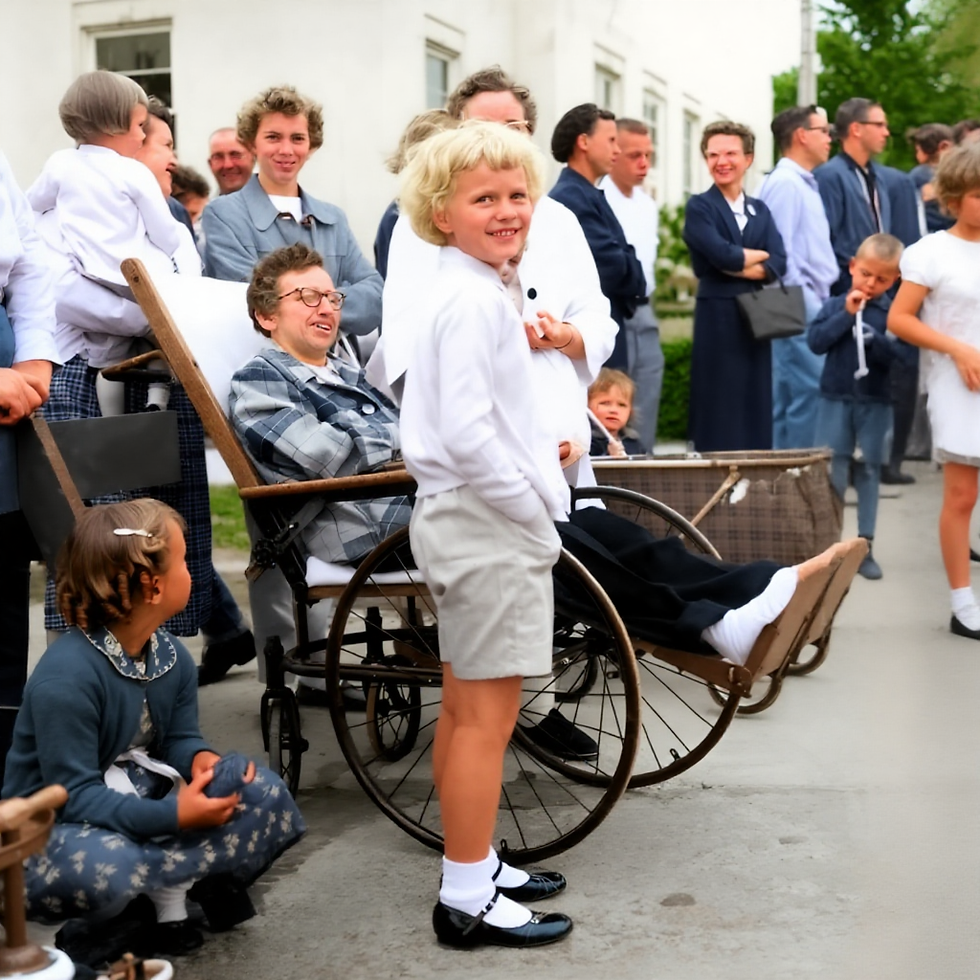


By afternoon, Lakeside Park had transformed into a playground of pure summer delight. Children raced across the grass in foot races, swung hammers in nail‑driving contests, and dove face‑first into pie‑eating competitions that left cheeks smeared with berries and laughter. The big midway buzzed with rides, games, and concessions, its lights flickering against the lingering gray of the sky. Families wandered from booth to booth, the smell of popcorn and cotton candy drifting through the air, the lake stretching out behind them in soft blue.


For those seeking a quieter rhythm, the Rogers City Community Band filled the bandshell with patriotic music. Notes lifted gently over the park, mingling with the breeze and the distant shouts of children. It was a moment of calm in a day overflowing with activity, a chance to sit back and let the familiar songs of the holiday settle warmly into memory.
But the afternoon still had more to give. At Gilpin Memorial Field, the Flying J Rodeo delivered a 2½‑hour spectacle of grit and showmanship. Bulls bucked and twisted, horses kicked up dirt, riders roped calves with practiced precision, and trick performers dazzled the crowd. Rodeo clowns darted and joked, keeping the audience laughing between bursts of adrenaline. For many, it was the highlight of the day—a slice of Western excitement right in the heart of Rogers City.
Music carried the celebration into the evening. The Charley Brown Orchestra, a 16‑piece ensemble from Lansing, played two major events: the Teen Age Canteen in the afternoon and the Queen’s Ball at night. Both were held in the Rogers City High School gymnasium, where polished floors and decorated walls welcomed dancers of every age. Teenagers twirled and laughed under bright lights, while the Queen’s Ball brought elegance and festivity, with Carol McLennan presiding over the night she would remember for the rest of her life.

The weekend doubled as a homecoming, drawing thousands of visitors and offering a perfect backdrop for class reunions. The Classes of ’33, ’43, and ’48 gathered to reminisce, reconnect, and celebrate the town that had shaped their youth. Stories were shared, old friendships rekindled, and the sense of belonging deepened with each handshake and embrace.

One of the most remarkable attractions of the weekend was the open house at the Calcite plant. Visitors toured the Str. Rogers City, exploring the vessel with a sense of awe at its scale and importance. A staggering 3,400 people attended, turning the event into a celebration of the industry that had long been the backbone of the community. For many, stepping aboard the ship was like stepping into the living history of Rogers City itself.


By the time the weekend drew to a close, the rain had become a footnote—something mentioned only to marvel at how little it mattered. What endured instead were the sights and sounds of a town alive with pride: the crown placed on a young queen’s head, the thunder of bagpipes, the cheers at Lakeside Park, the dust kicked up by rodeo riders, the swell of orchestral music in a school gym, the reunions that stitched generations together, and the hum of industry welcoming thousands through its gates.


Comments