May 1958
- charliebunton
- 13 hours ago
- 3 min read

As dawn lifted over Rogers City, the first light spilled across rooftops like a soft blessing, warming the chill that lingered from the night. Birds stitched their songs through the quiet streets, each note bright and hopeful, while cool breezes drifted through open windows and brushed against kitchen curtains. The town felt as if it were stretching awake—slow, content, ready for whatever the day might bring.
On Huron Avenue, the familiar click of a lock turning signaled that Fred “Freddy” Vogler had opened the door to his one‑room barbershop. The scent of talc and shaving cream mingled with the faint aroma of oiled clippers as men—young boys with cowlicks, fathers needing a trim, retirees eager for conversation—waited outside, hands in pockets, breath rising in the cool morning air. Freddy’s laugh, warm and unmistakable, drifted out the doorway as he welcomed them in. For the next thirty years, that little shop would be a place where generations sat in the same chair, watched their reflections age in the same mirror, and left feeling a little lighter than when they arrived.


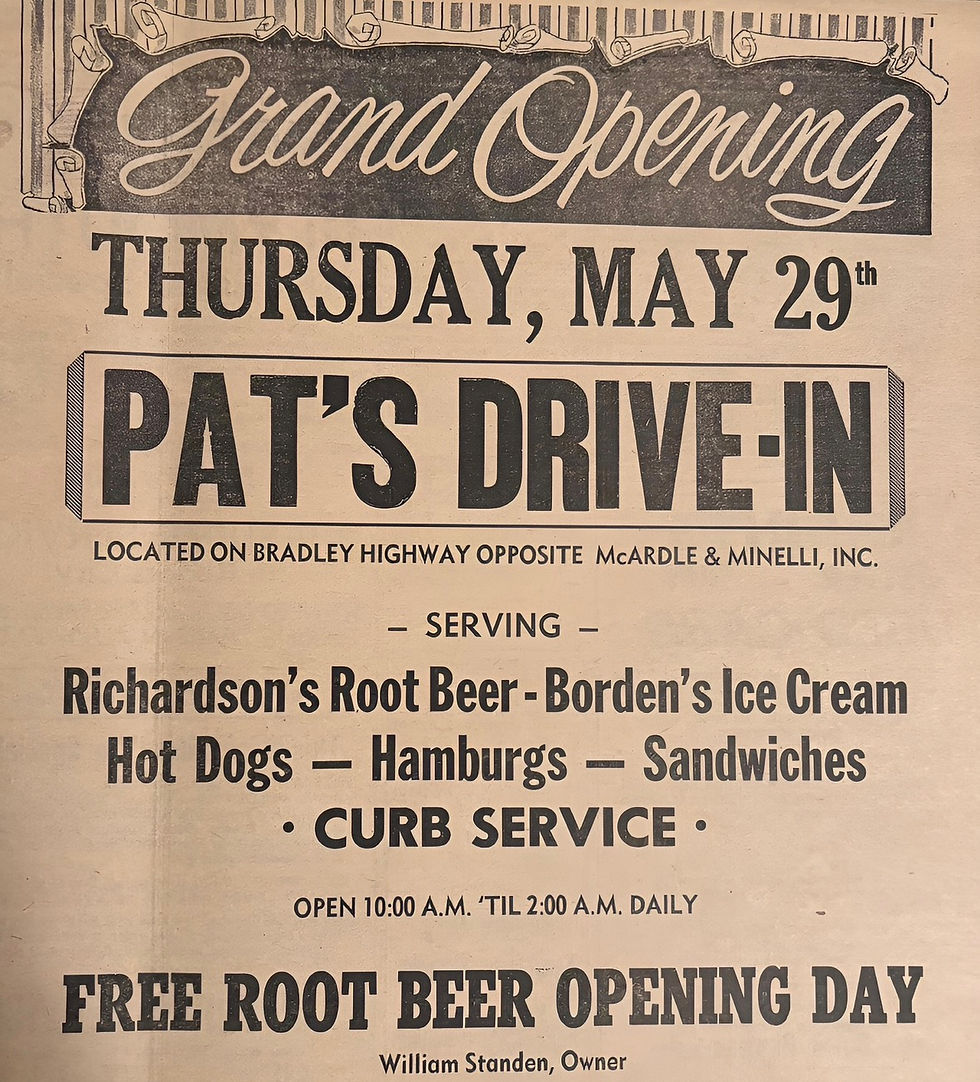
Across town on Bradley Highway, excitement buzzed like a radio tuned just right. William and Valderine Standen were celebrating the grand opening of Pat’s Drive‑In, named for their daughter Patricia. The smell of sizzling hamburgers and deep‑fried chicken drifted across the lot, mixing with the sweet, creamy scent of Borden’s ice cream. Teenagers crowded around the dairy bar, their laughter rising above the clatter of frosted Richardson’s Root Beer mugs being set on counters. Car windows rolled down, music spilled out, and the neon sign glowed against the evening sky as the Standens served customers from 10 a.m. until 2 a.m. It didn’t take long for Pat’s to become the place where stories began—first dates, summer nights, friendships sealed over shared fries.


Yet the season also carried a bittersweet note. After twelve years of service, local conservation officer Ned Curtis was preparing to leave Rogers City for his new post as Assistant District Supervisor in Gladwin. His departure stirred a quiet ache in the community. Curtis had been more than an officer—he was a steady presence, a model citizen whose dedication shaped the town. He served as president of the Rogers City Servicemen’s Club, founded the Rogers City Little League as its first president, and led the Northern Michigan Law Enforcement Association. People remembered his firm handshake, his easy smile, and the way he always seemed to know exactly what the community needed. As he packed for Gladwin, Rogers City wished him well, grateful for the years he had given.


But pride soon swept through town like a fresh gust off Lake Huron. Gerald Bunton, president of the Bow and Quiver Club, had just won the National Archery Tournament in the bowmen class in Grayling, triumphing over 225 of the finest archers in the country. The applause, the smell of pine in the Grayling air, the weight of the medal placed around his neck by Fred Bear himself—the legendary bowhunter whose name carried the gravity of the sport—created a moment Gerald would never forget. He had begun archery in 1952 with his wife Virginia and son John, and together they had formed the Bow and Quiver Club later that year. Now boasting more than thirty members, the club hosted tournaments across northern Michigan, from indoor shoots at Greka’s Tavern to gatherings at the Presque Isle County Sportsmen’s Club, Radio Tavern, and the Knights of Columbus Hall. Arrows thudding into targets, the sharp scent of cedar shafts, the camaraderie of archers sharing tips and stories—these were the sounds and textures of a passion that had grown into a community.




Comments