August 1951

In Rogers City, the atmosphere buzzes with excitement on this August morning, as the sun casts a golden hue over the town, illuminating the faces of its residents. Inside the venerable St. Ignatius Catholic Church, the congregation is filled with profound gratitude, hands joined in fervent prayer, marking the realization of a long-held vision that has finally come to fruition. This momentous occasion is not just an event; it symbolizes the culmination of years of dreams, effort, and unwavering faith. It all began what seems like ages ago—the sound of hammers striking nails, the rhythmic scrape of saws cutting through wood, and the earthy scent of freshly turned soil where the new church would stand proudly.


To ready the sacred ground for this monumental edifice, the old rectory was meticulously moved from its original location on Third Street to a new site on Ira Street. Its robust frame creaked with effort during the relocation, a true testament to the community's dedication. Architect Joseph Goddeyne from Bay City infused the building with creative passion, a process that began in 1945 when he first put pencil to paper. He repeatedly sketched and revised his designs, refining his vision until his fourth and final concept captivated the congregation and ignited their imaginations. Following the completion of the Rogers City Hospital the year before, Goddeyne directed his creative energy upwards, designing a structure that would serve not only as a place of worship but also as a symbol of hope and unity for the community.


The church is a wonder to behold—shaped like a majestic ship ready to sail into eternity, its towering structure piercing the Michigan sky and standing as a beacon visible from the choppy waters of Lake Huron, where freighters and fishing boats trace the horizon in their daily journeys. Above the grand entrance, three intricately carved saints stand guard: Francis, Casimir, and Ignatius, their stone faces weathered by the relentless lake winds but eternally vigilant, embodying the spirit of faith and protection over the congregation. As you push open the heavy doors and step inside, you are greeted by an interior that is not only spacious enough for 840 souls to gather but also designed to allow voices to rise together in harmonious song. The space envelops you like a warm embrace—walls glowing in soft shades of old rose, butter yellow, and cream white, while pale cocoa-brown wainscoting provides an earthly elegance that complements the sacred atmosphere.


Run your fingers along the altar, cool to the touch: the marble, shipped from Italy's ancient quarries, gleams under the soft light, a reminder of the craftsmanship and dedication that brought this church to life. For mothers with restless infants, a soundproof room has been thoughtfully provided, where their babies' cries can be muffled while Mass proceeds uninterrupted. Additionally, committee members now have a dedicated space to gather, fostering a sense of community and collaboration. The diamond-shaped sacristies shine with polished efficiency, ready to support the spiritual needs of the congregation.

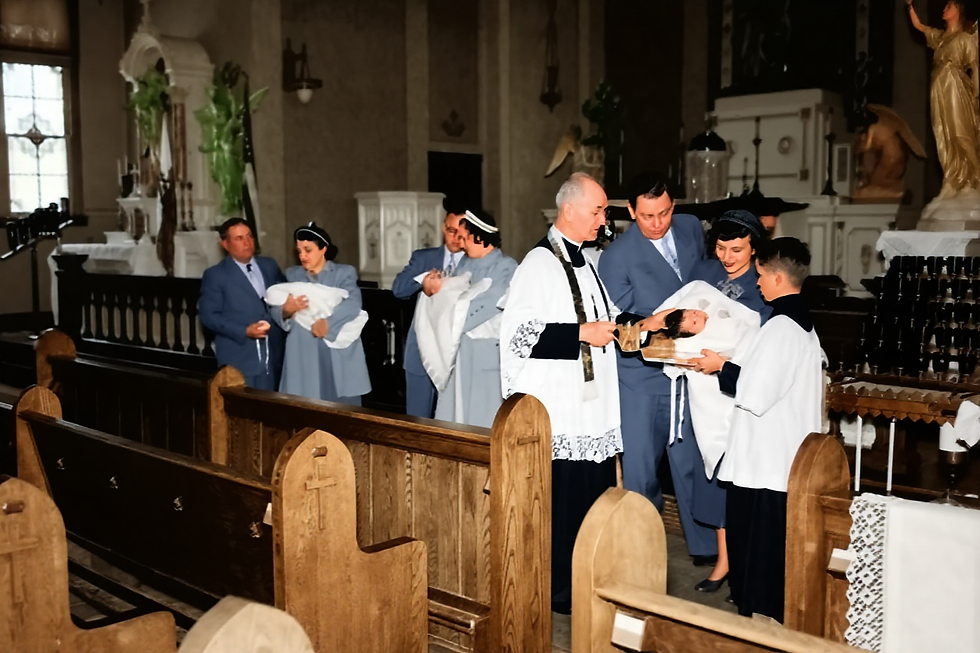
However, before this glorious beginning could unfold, there were bittersweet farewells to be made. In the old church, communion wafers dissolved on tongues one last time, filling the air with a sense of nostalgia and reverence. Baby Edward Modrzynski's forehead gleamed with blessed water during the final baptism, a poignant reminder of new life and hope. Father Casimir Skowronski's voice echoed through the familiar rafters during the last Mass, his words imbued with both sadness and hope, as the congregation bid farewell to a beloved space that had held countless memories. That cherished building would not be abandoned; instead, it would transform into a parochial school and parish hall, where children's laughter would echo through the halls, and the clatter of forks on plates would accompany the community dinners that would foster fellowship and connection.



August 15th dawned bright and clear, marking the day of the first Mass in the new sanctuary, a day filled with anticipation and joy. Then, September 16th arrived like Christmas morning, bringing with it a strong sense of excitement. The pews filled nearly to capacity, shoulders pressed together in a close-knit gathering, the air thick with the mingling scents of perfume, aftershave, and the sweet fragrance of flowers adorning the sanctuary and narthex—gifts overflowing from grateful hands. Bishop Stephen Woznicki of Saginaw stood beside Father Skowronski throughout a two-hour ceremony that felt both endless and fleeting, each moment etched in the hearts of those present.


The adult choir's voices soared through the Mass in B-flat, their notes climbing into the rafters, filling the space with a divine resonance. Male singers intoned the Gregorian Chant, ancient syllables rolling like waves against the shore, connecting the present with the sacred traditions of the past. During the offertory, "Laudate Dominum" burst forth—Praise the Lord!—while at communion, choirmaster Joseph Hassett's solo pierced every heart: "Ecce Panis Angelorum"—Behold the Bread of Angels. Mrs. Hassett's fingers danced across the organ keys, drawing forth music from wood and wind, creating a tapestry of sound that enveloped the congregation in a spiritual embrace.


That afternoon, 178 children and 36 adults stood straight-backed as Bishop Woznicki catechized them, their voices responding in unison, a chorus of faith and commitment before he anointed their foreheads with chrism oil for Confirmation, sealing their dedication to a life of faith. The Solemn Benediction of the Blessed Sacrament concluded the day, with incense smoke curling heavenward like visible prayers, rising to the heavens as a testament to the community's devotion.


But there was more to celebrate. Earlier that month, on August 5, the congregation gathered to bless Mt. Calvary Catholic Cemetery, located just four miles south on US-23. Monsignor John Gatzke of Alpena performed the rite, while Reverend LaRue of Cheboygan's words drifted over the gathered crowd, creating an atmosphere of solemnity and reverence. They processed across the cemetery grounds, voices lifting in blessing, feet marking out the Stations of the Cross from one through fourteen—a sacred path where the faithful would someday rest, a promise of eternal peace and solace.


In Rogers City that hot August afternoon, heaven felt within reach, as the community came together in faith, hope, and love, celebrating not just the physical structure of their new church, but the deep bonds that united them as a congregation. Each moment, each prayer, each note of music resonated with the spirit of the town, weaving a rich tapestry of history and devotion that would endure for generations to come.


Comments