April 1959

As winter finally began to lose its iron hold on Rogers City, the change in the air felt deeper than the shift in temperature. The long season had carried a weight unlike any in memory. At the Calcite quarry and across the Bradley Transportation Line, men went about their work with a quiet heaviness, still living in the shadow of the Carl D. Bradley tragedy. The United States Coast Guard investigation had stretched through the winter, slowed by the simple, painful fact that the Bradley herself had not yet been found. Without the ship, answers remained out of reach, and the families of the thirty-three lost sailors endured a season of waiting that felt endless.
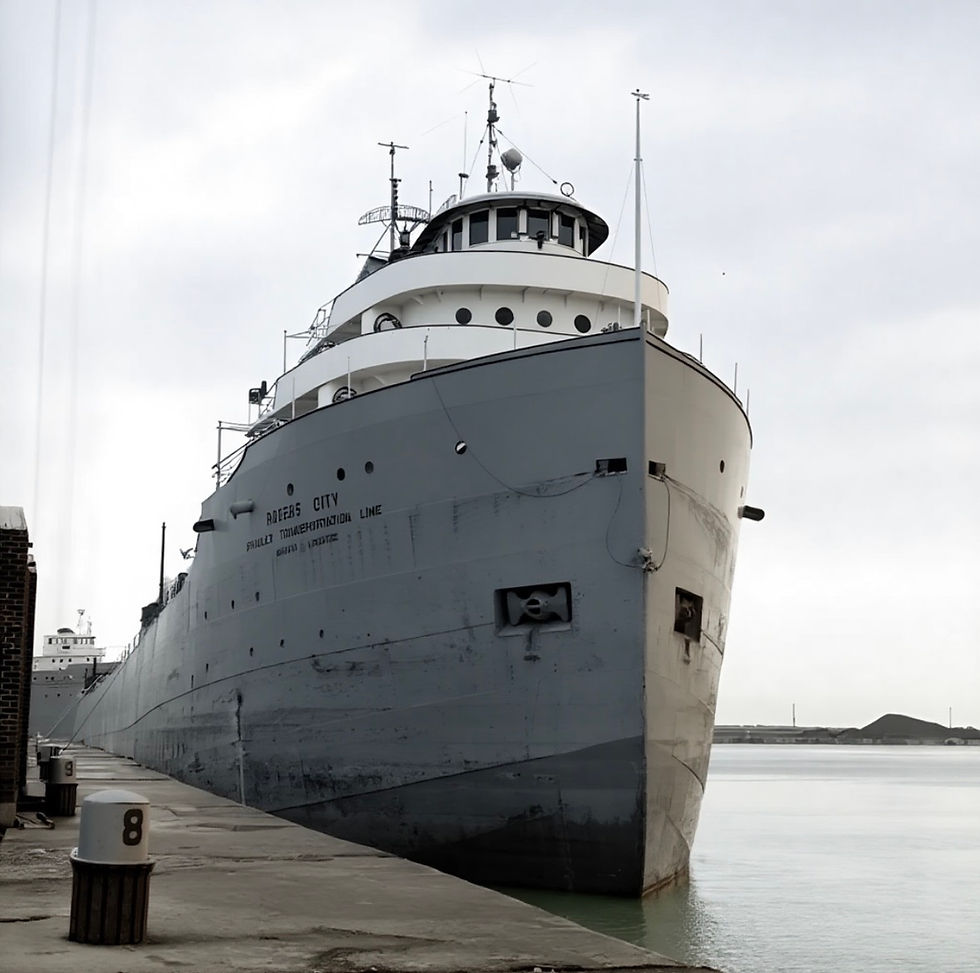


As the weather finally started to clear, a cautious, fragile hope began to stir once more. The Bradley Transportation Line launched its own search, led by Captain Donald Nauts of the Str. John G. Munson. Nauts brought with him a new tool, a Sea Scanner sonar device capable of tracing the contours of the lakebed with high‑frequency sound waves. Each pass of the scanner produced a ghostly outline of what lay below, and after several sweeps, a shape emerged—large, unmistakable, resting on the bottom of Lake Michigan. It was only a possibility at first, but it was enough to send a ripple of anticipation through the community.
Michigan Limestone sought additional expertise, bringing in underwater salvage specialists from England and Canada. Before long, the 175-foot Submarex, a former Navy patrol vessel, arrived from the West Coast, outfitted with underwater television equipment typically used in oil drilling. For ten days, the crew studied the mysterious object on the lake floor. At last, the confirmation came: it was the Bradley. A breakthrough, a turning point, a moment that seemed to let the town exhale for the first time in months.


Yet even with answers beginning to surface, the winter’s tension lingered. Employees at Calcite continued the demanding seasonal work required to prepare for spring operations, conversations often circling back to safety, loss, and the fragile line between routine and disaster. That line was underscored in early spring when Clarence Curvin narrowly escaped serious injury at the quarry. Driving toward the company office in thick fog, he never saw the D&M locomotive until it struck his car, pushing it 283 feet before coming to a stop. Miraculously, Curvin walked away unharmed, a reminder of how quickly fate could shift.

Beyond the quarry gates, the town itself was stirring with its own drama. A heated mayoral race had taken hold of Rogers City. With only weeks before voters headed to the polls, longtime resident and retired mail carrier James Brackenbury entered the race as a slip candidate, challenging incumbent Kenneth Vogelheim. Brackenbury’s reputation for steady service and familiarity with nearly every household in town carried weight. When the votes were tallied, he came out on top with a decisive 794 to 407, sweeping all four precincts. It was a moment of civic energy, the kind that made the town feel alive again after a somber winter.


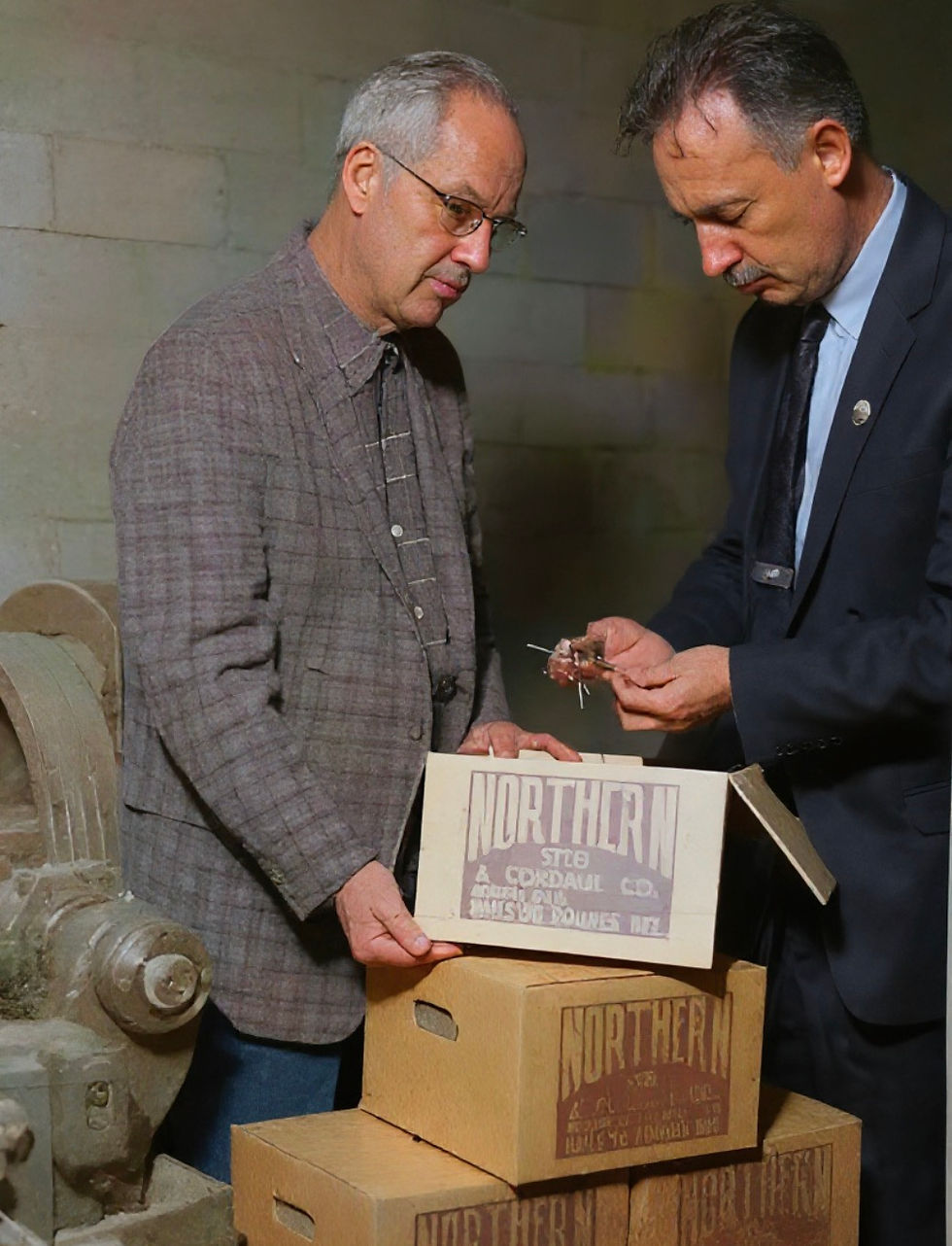
Spring also brought new enterprise. Near Trout River, in a freshly completed building that would later become the city garage, Rogers City welcomed the first nail factory in Michigan. The Northern Steel and Cordage Company produced nails at a remarkable rate—325 per minute, or 1,000 pounds per hour—and distributed fencing, barbed wire, baler wire, and hardware cloth. Managed by Harry Crawford of Caro, the venture promised jobs and optimism, though it would ultimately prove short‑lived. Still, for a brief moment, it felt like another sign of renewal.
At Rogers City High School, the season was bursting with activity. During the annual Spring Concert, senior cornet player David Wyant received the inaugural John Philip Sousa Band Award, presented by City Band Director Rhoud Benson and High School Band Director Delmar Conley. The award, honoring musicianship, leadership, scholarship, and citizenship, carried special meaning—it was named in memory of Jacquelynn Studier, who had played baritone horn and piano in both the city and dance bands until her passing. The applause that followed Wyant’s name felt like a tribute not only to him, but to her.


Athletes were celebrated next at the annual All Sports Banquet, held in the Rogers City Elementary School gymnasium. Coaches George Noch, Earl Bye, and Donald Belland handed out awards to varsity basketball and football players and the Junior High basketball team. The coveted most valuable player honors went to Ron Paull in basketball and Dennis Schultz in football, each recognized for their grit and leadership.


The school’s forensics team—Ronald Wheeler, Ida Hodgetts, Kay Radtke, Judy Karsten, Carla Paull, and Jim Nidy—earned a victory at the district competition at Onaway High School, advancing to regionals at Northwestern Michigan College in Traverse City. Their success added another bright thread to the tapestry of spring accomplishments.

And on the diamond, the Rogers City Hurons opened their baseball season with a 4–2 win over Onaway High School. Starting pitcher Ron Paull delivered five strong innings, and Bob Pollock sealed the game with a sixth‑inning home run. Under Coach Earl Bye, the team looked poised for a promising season.
To build camaraderie and sharpen their skills, members of the Varsity Club boarded a bus bound for Detroit. At Briggs Stadium, they attended a baseball clinic focused on hitting, fielding, and pitching. That afternoon, they watched the Detroit Tigers face the Washington Senators, and the next day saw the Tigers defeat the New York Yankees in a doubleheader. McArdle & Minelli Inc., the local Chevrolet‑Oldsmobile dealership, covered the entire trip, including transportation, lodging, tickets, and entertainment. Their generosity gave the students not just a weekend away, but memories that would stay with them long after their playing days ended.


Comments