October 1958
- charliebunton
- 16 hours ago
- 4 min read
Rogers City High School eased into autumn with that familiar blend of fresh notebooks, hallway chatter, and the quiet excitement that comes with a new school year finding its rhythm. As students settled into their classes, the building began to hum with activity—sign‑up sheets filling, club meetings kicking off, and the first sparks of leadership taking shape.
The senior class set the tone early, gathering to elect their officers for the year. Mark Heller stepped forward as Class President, steady and confident; James Nidy took on the role of Vice President; Suzanne Hopp accepted the responsibilities of Secretary; and Harlan Wagner rounded out the team as Treasurer. Their election wasn’t just a formality—it was a passing of the torch, a moment where classmates entrusted their peers to help guide the year ahead.


Across the hall, the student council held its first meeting under the guidance of Herman Haneckow. The council itself felt like a cross‑section of the entire school: two freshmen just beginning their high‑school journey, three sophomores finding their voice, four juniors balancing experience with anticipation, four seniors ready to leave their mark, and one honorary member—foreign exchange student Harald Share—bringing a global perspective to the table. Together, they represented the heartbeat of the student body.

Clubs and organizations sprang to life as well, each one adding its own thread to the tapestry of school life. The Pep Club rallied spirit for every game. Hall Monitors took up their posts with quiet authority. The Varsity Club gathered athletes under one banner. The Girls’ Athletic Association met with purpose, while the Future Homemakers of America prepared for another year of hands‑on learning. Student Librarians organized shelves and stories; the Jets Science Club explored new ideas; the Audio‑Visual Club tinkered with projectors and cables; the Glee Club filled the halls with song; and the Ski Club looked forward to the first snowfall. Each group offered a place to belong, a chance to grow, and a way to contribute.





But nothing stirred the school quite like Homecoming. All week long, students worked late into the evenings building floats for the parade, transforming chicken wire and crepe paper into scenes from “Mother Goose Holiday,” this year’s theme. The smell of paint, the laughter echoing from the shop room, the shared sense of purpose—it all built toward the moment when their creations would roll onto Gilpin Memorial Field.

When halftime arrived, the stadium lights washed the field in gold. The Rogers City High School Marching Band struck up “Hail, Hail, the Gang’s All Here,” their formation shifting until a giant RC took shape across the turf. The crowd roared its approval.

Then came the floats: “Rub‑A‑Dub, Three Men in a Tub,” “Peter, Peter Pumpkin Eater,” “Humpty Dumpty,” and “Little Boy Blue”—each one a burst of color and imagination. Finally, the Snow White and the Seven Dwarfs float appeared, carrying Homecoming Queen Jackie Paradise. She glowed beneath the lights, accompanied by her court—Margo Miller, Roz Buza, and Carol Jones. At midfield, Homecoming King Larry Sobeck stepped forward and presented her with a bouquet of flowers, a moment that felt almost cinematic in its sweetness.


The Hurons ultimately fell to the Canadian Soo, 25–2, but the score hardly mattered. What lingered was the magic of the night—the pride, the pageantry, the sense of belonging. Students danced late into the evening in the high school gymnasium, the music carrying them through a celebration they would remember long after graduation.

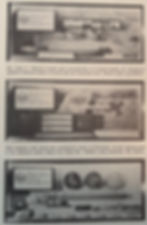
Beyond the school grounds, Rogers City found itself represented far from home. Michigan Limestone was featured in a three‑window display at the U.S. Steel headquarters on Broadway Street in New York City. The exhibit showcased a model of the Str. John G. Munson, a massive piece of limestone from the Calcite quarry, and eight samples of Calcite’s products—an impressive tribute to the industry that shaped the community.

And in a moment of deep significance for the region, Reverend Casimir Skowronski—longtime spiritual leader and former pastor of St. Ignatius Catholic Church—was bestowed Papal honors by His Holiness Pope Pius XII, earning the title of Right Reverend Monsignor. Skowronski first arrived in Presque Isle County on April 9, 1916, serving St. Dominic’s Catholic Church in Metz before becoming the first resident pastor of St. Ignatius in 1919. His decades of service left an imprint on generations, and the honor recognized a lifetime of devotion.

