June 1957

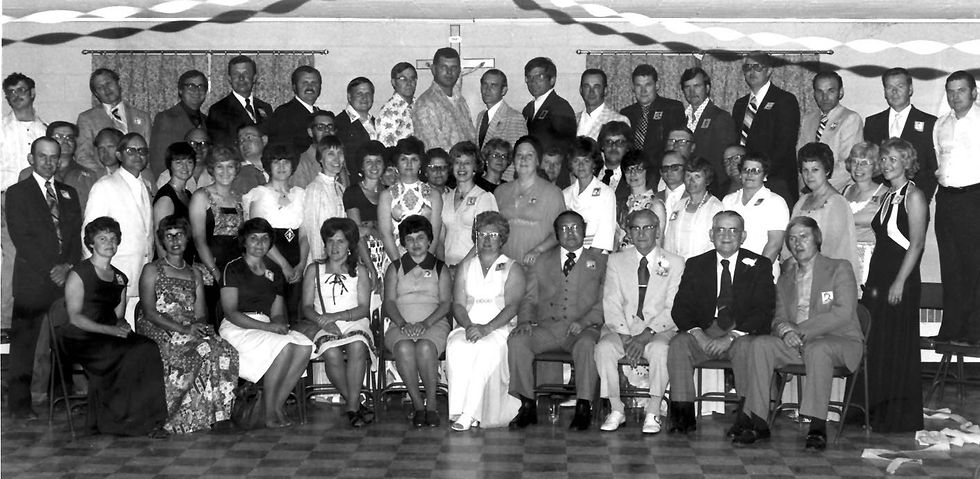
Eighty‑eight seniors filled the Rogers City High School gymnasium this month, their black gowns rustling softly like the turning of a final page. Twenty‑four honor students stood among them, carnations pinned neatly to their lapels—the class flower—each bloom a small, bright promise. Above them, baby‑blue and silver decorations shimmered in the lights, the colors the Class of 1957 had chosen to carry into the world. Their class motto, “We Shall Find a Way or We Shall Make One,” felt less like a slogan and more like a declaration of who they already were.

Class Valedictorian and Class President Roger Fleming stepped to the podium first, offering words shaped by equal parts pride and possibility. Lou Monroe, the Class Salutatorian, followed with a speech that blended gratitude with the quiet courage of a class ready to step beyond the familiar halls of Rogers City High School. Then Charles Burns, President of the Michigan State Board of Education, delivered the commencement address—“Living in the World Today”—a reminder that the world awaiting them was wide, complicated, and full of opportunity. When Principal Milton Hoffer presented the Class of 1957, the applause rose like a wave, carrying with it the hopes of families, teachers, and a town that had watched these students grow.




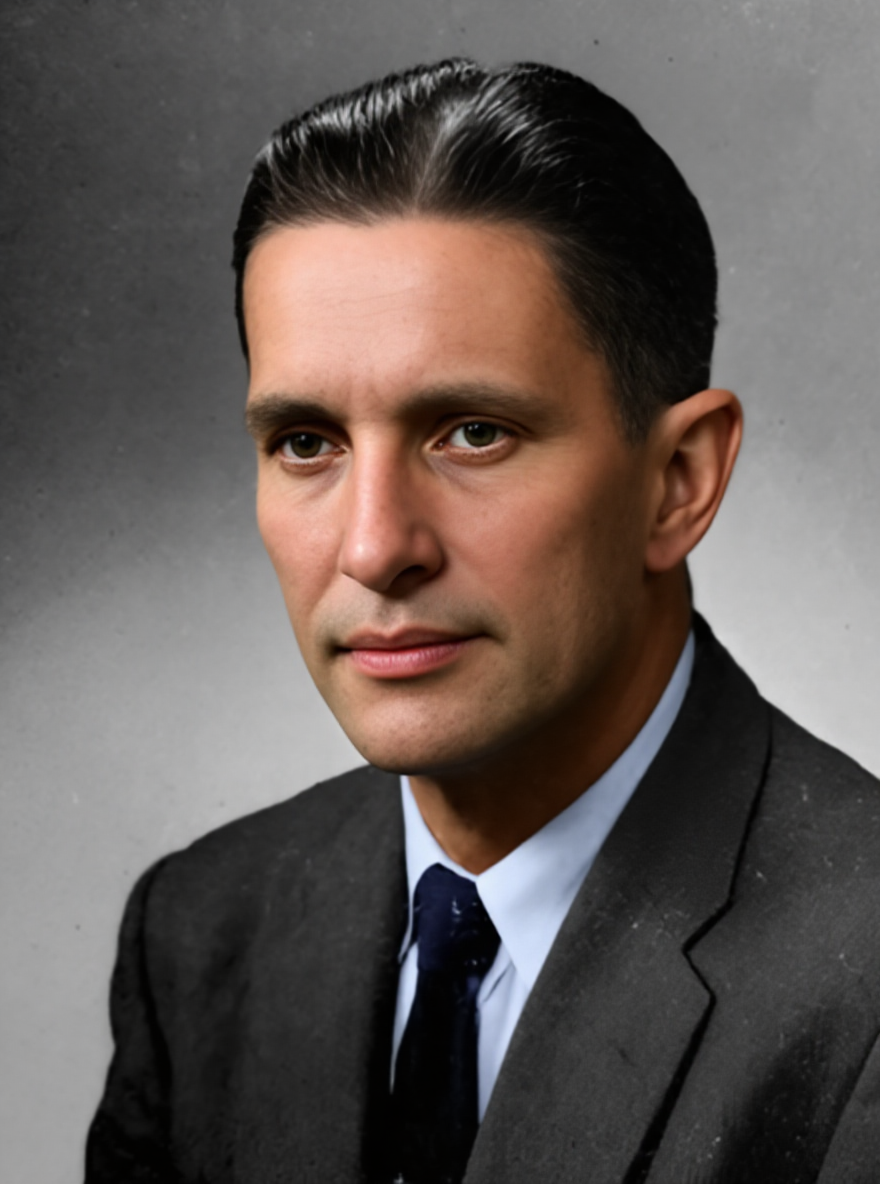
As the school year came to a close, the yearbook staff put the finishing touches on this year’s edition. Led by editor-in-chief Catherine Thornley and supported by Mr. Schneider, the team incorporated photos taken throughout the year by the photography club, under senior Barry Heinzel’s guidance, along with professional shots from local contributing photographer Ferris Parsons. This year’s Perannos is sure to be a hit.


And just like that, summer began.
Main Street came alive as the second season of Little League kicked off with a parade led by the Boy Scout Color Guard. Children lined the sidewalks, waving as Little League Queen Mary Lou Gorlewski passed by with her court—Betsy Sobeck, Elizabeth Osborn, Patty Orr, Barbara Filipiak, and Linda McWilliams—their smiles as bright as the June sun. At the ballfield, Donald VanZandt, the newly appointed Manager of the Calcite Plant, threw out the ceremonial first pitch, marking the start of another season of small‑town magic.

This year also brought something new: a Babe Ruth League for boys aged thirteen to fifteen. George Paulus, its first president, welcomed approximately sixty eager players. At registration, the boys watched the film "The Babe Ruth Story", their eyes wide with the kind of dreams only baseball can stir. Four teams took shape, each backed by a local sponsor: the Bradley Transportation Line Beavers, the Michigan Limestone Otters, the Karsten Dairy and Bradley UCL Union Bears, and the United Construction Workers Local 448 Wildcats. Lyn McLennan was crowned the first Babe Ruth Queen, accompanied by her court—Geraldine Sikorski, Carrie Claxton, LaDonna Haneckow, Gloria Lamb, and Patricia Kelley—adding a touch of pageantry to the league’s inaugural year.


By season’s end, the Michigan Limestone Otters claimed the Babe Ruth League title with a 10–8 record. In Little League, the Tigers topped the Majors at 10–4, while the Yankees led the Minors at 7–3. Each victory, each loss, each dusty slide into home plate became part of the town’s summer soundtrack.
Far from home, another Rogers City athlete was making his mark. PFC Lawrence Langlois, a 1954 graduate of Rogers City High School and now a supply specialist with the 581st Engineer Company, was playing baseball in France with the Chinon Engineer Depot’s Red Devils. As a catcher, he carried a piece of Rogers City with him onto every field, proving that even an ocean away, the rhythms of home could still echo.

Meanwhile, along the breakwall stretching into Lake Huron, a different kind of activity was unfolding. Thousands of seagulls—between 5,000 and 6,000—nested in the tall grass, their calls rising above the steady hum of the lake. A team of naturalists from the Cranbrook Institute of Science arrived at the Calcite Plant to study their migratory patterns. They banded 2,100 birds with aluminum tags supplied by the U.S. Fish and Wildlife Service, each stamped with the place of banding. The early findings astonished them: some of these gulls had traveled from as far away as Ecuador, South America. In a town built on limestone and lake winds, the discovery felt like a reminder that even the most familiar places are connected to distant worlds.


Comments