July 1955
- charliebunton
- Feb 4
- 4 min read

Dawn rose softly over Rogers City, brushing Main Street with a warm, golden glow that felt like the opening note of a beloved old song. The air carried that unmistakable Fourth of July blend—fresh morning dew, the faint sweetness of blooming lilacs, and the distant crackle of someone already lighting a grill. Families spilled from cars, lawn chairs slung over shoulders, children darting ahead with the kind of excitement that makes their footsteps sound like laughter on pavement. People of every age lined the street, settling into their favorite spots as if claiming a front‑row seat to history.

When the parade finally appeared, it didn’t simply arrive—it unfurled. A wave of color, sound, and hometown pride swept down Main Street, and for a moment the whole town seemed to vibrate with joy. Eighty‑eight floats rolled past in a mile‑long procession, each one brighter and more imaginative than the last. Marching bands sent brass notes soaring into the sky, their drums thumping like the heartbeat of the city. Local servicemen and auxiliary members marched with crisp uniforms and quiet dignity, their steps steady and sure. Children pedaled by on bicycles transformed into rolling works of art, streamers fluttering behind them like tiny fireworks caught in the morning breeze.


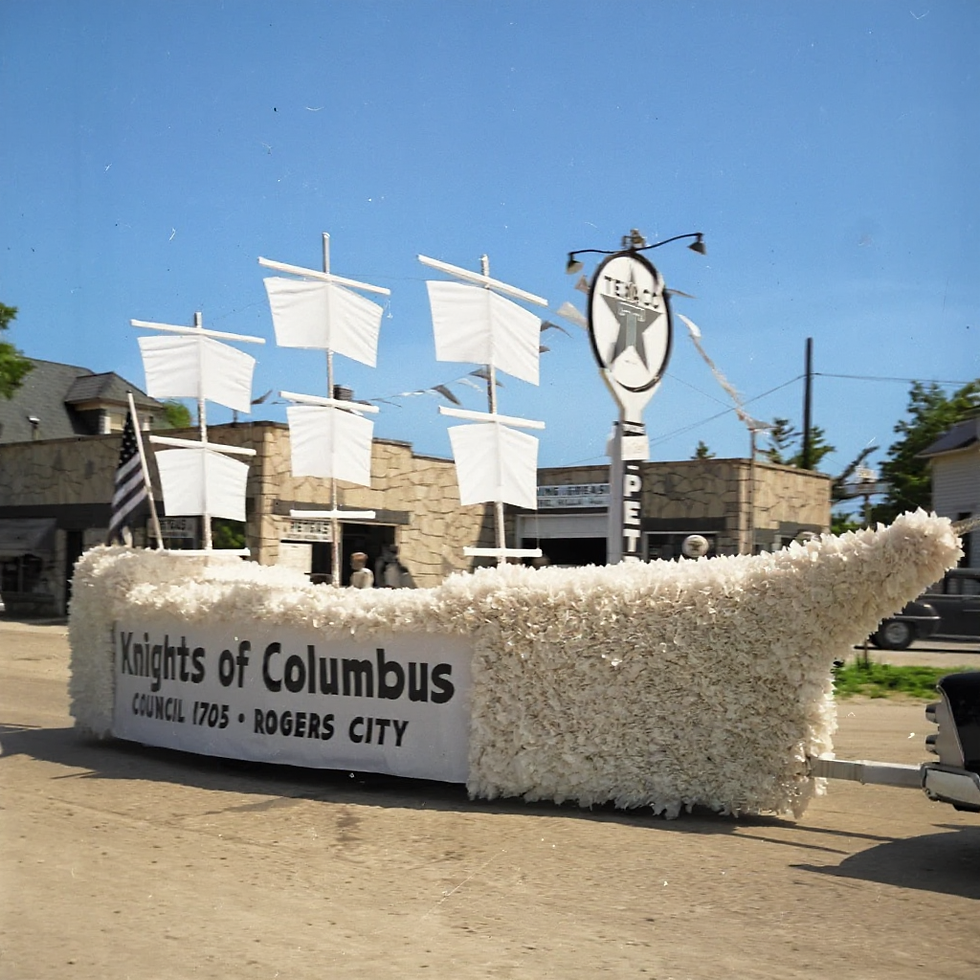
The judges—Dr. Leland Kile, Lawrence Larke, and Dr. Edward Arscott—watched with furrowed brows and delighted smiles, clearly torn. How do you choose favorites when every float feels like a love letter to the community? In the end, A‑P Super Service earned best decorated, Presque Isle Bank claimed most original, and The Cozy Corner took home most humorous. Each announcement was met with cheers that rippled like a warm tide.

By afternoon, the celebration shifted to Lakeside Park, where the grass was warm beneath bare feet and the lake breeze carried the laughter of children racing across the grounds. The children’s races filled the air with the rhythmic slap of sneakers on earth and the triumphant squeals of winners and near‑winners alike. The Amateur Show brought its own kind of magic. Don and Terry Syrett’s harmonica duet floated through the air, soon joined by the warm, sweet harmonies of Betty Kierzek and the Richards siblings, Andree and Hollis. Roland Wolgast’s harmonica added a soulful note, and Faith Hornbacher and Sally Gibbs had the crowd chuckling with their lively skit. The Rogers City Band tied it all together, their music drifting across the park like a familiar embrace, the kind that makes you close your eyes just to savor the moment.

As the sun dipped low, the sky blushed pink and lavender, and families migrated toward the edge of Lake Huron. Blankets unfurled across the grass. Car radios murmured softly. Children pointed eagerly at the darkening sky, their faces glowing with anticipation. The lake itself seemed to hold its breath. Then, with a crack that echoed across the water, the first firework burst open above the shoreline. For nearly an hour, the night bloomed with color—reds that glowed like embers, greens that shimmered like northern lights, golds that rained down like sparks from a celestial forge. Reflections danced across the lake’s surface, doubling the spectacle. The grand finale roared across the sky, a thunderous cascade of light and sound, and when the last echo faded, applause rose like a wave—grateful, full‑hearted, and proud.

The City Bandshell at Lakeside Park kept the season alive with music that drifted across the water on warm evenings. One night, the 566th Air Force Band of Illinois drew a crowd that filled the park from the front row to the farthest picnic blanket. Their program, “Musical Flight to Europe,” carried listeners across oceans and cultures without anyone ever leaving their lawn chair.

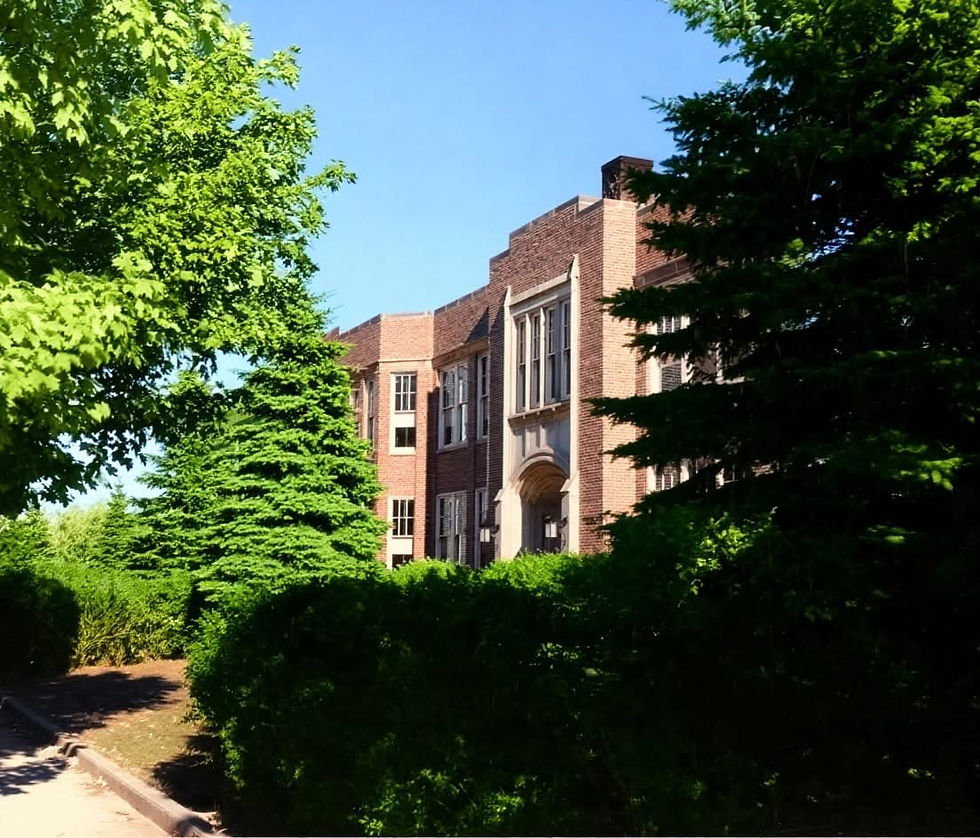
Meanwhile, the Women’s Civic League brought new energy to the town’s youth with the Teenage Canteen—Wednesday night dances in the high school gymnasium that pulsed with excitement. More than 150 teenagers filled the room each week. Chaperones Mr. and Mrs. Milton Hoffer and Mr. and Mrs. James Quinn kept a watchful but encouraging eye as the kids danced, laughed, and lived out the soundtrack of their summer. Each week, four lucky teens were invited to join WHAK radio announcer Bob Shurts on his “Saturday Record Review,” where they shared their thoughts on the latest hits spinning on the turntable—songs like Fats Domino’s “Ain’t That a Shame,” Johnny Cash’s “Cry, Cry, Cry,” and Chuck Berry’s “Maybellene,” tunes that seemed to vibrate with the restless energy of youth.


Beyond the music and festivities, Rogers City’s rugged spirit was preparing for its moment in the spotlight. The town’s famed herring fishing was set to be featured on the popular television program “Michigan Outdoors,” hosted by Mort Neff. Photographer Everett “Ebb” Warren and Field and Stream writer Byron Dalrymple spent days capturing the rhythm of the docks—the slap of water against hulls, the creak of ropes, the shouts of anglers hauling in their catch. Their cameras rolled as the sun glinted off silver scales and Lake Huron stretched endlessly behind them. The footage, destined for a fall broadcast, promised to share a piece of Rogers City with viewers across the state.


Comments